
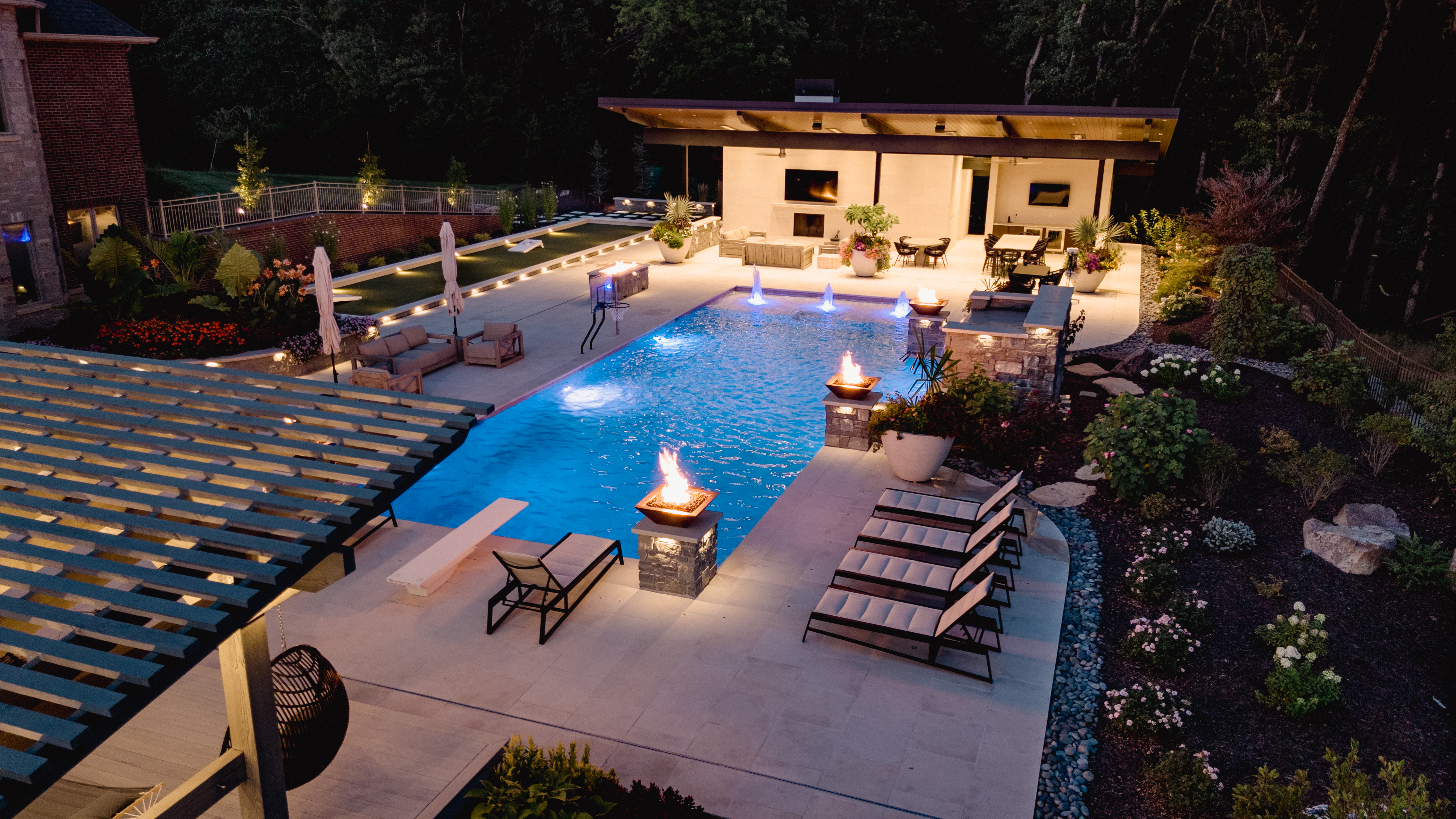
Outdoor fire features have become a popular addition to residential landscapes, offering warmth, ambiance, and a focal point for entertaining. From traditional fire pits to sophisticated outdoor fireplaces, understanding the different options available can help homeowners create a safe, functional, and visually appealing outdoor space.
Types of Outdoor Fire Features
Fire pits are the most common outdoor fire features. They are typically open on top and can be fueled by wood, propane, or natural gas. Fire pits create a casual, social atmosphere and work well in patios, backyards, and seating areas. They can be constructed of concrete block, stone, and even boulders.
Outdoor Fireplaces are more structured and vertical, resembling indoor fireplaces. They provide directional heat and a strong visual focal point. Fireplaces are ideal for defined outdoor living rooms and can be fueled by wood or gas.
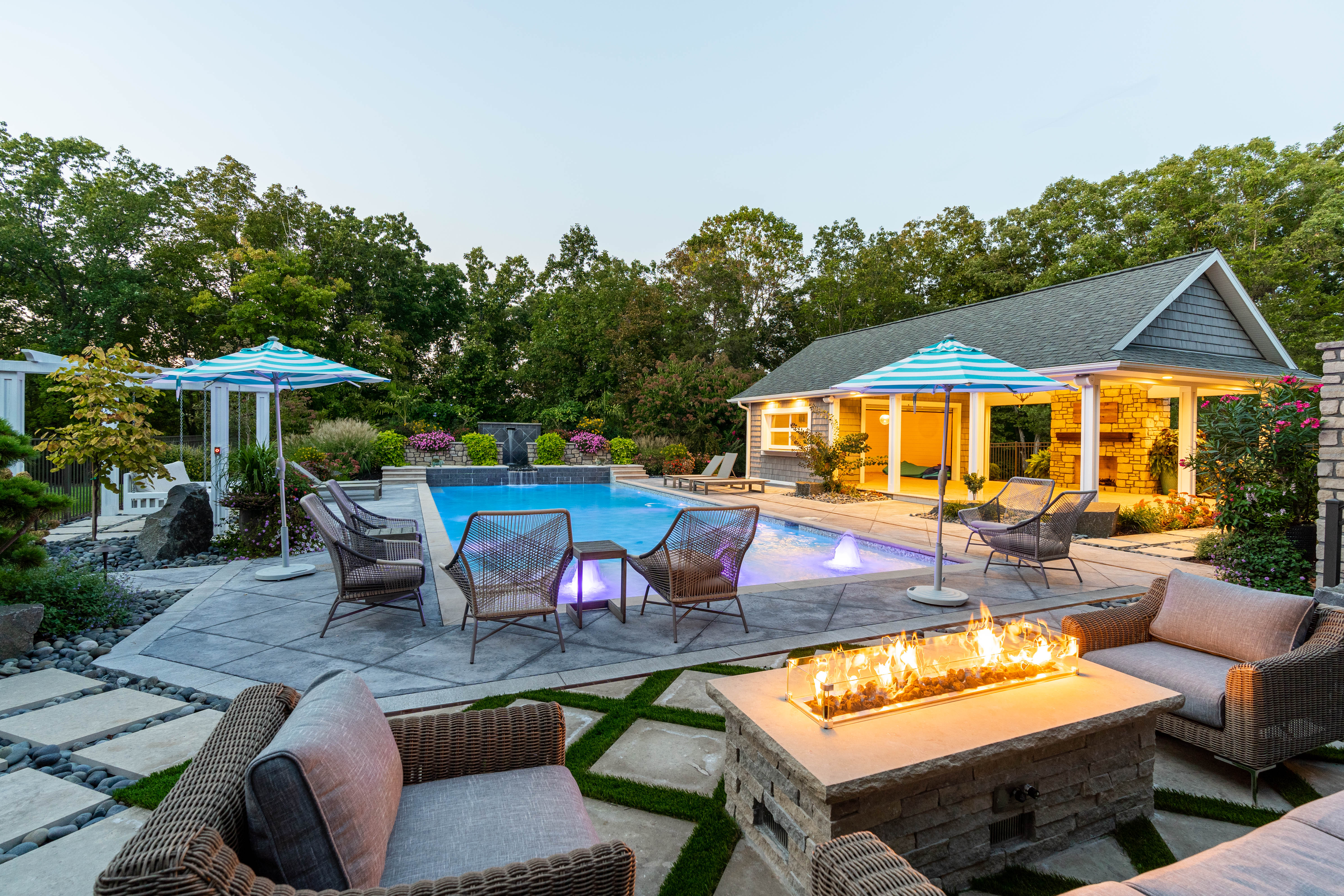
Fire tables combine a fire feature with functional tabletop space. Usually gas burning, they are popular for entertaining and work well in smaller spaces where versatility is important.
Fire bowls and troughs offer a modern, sculptural look. Fire bowls are typically round or oval, while fire troughs are long and linear. These features are commonly gas-fueled and used as design accents rather than primary heat sources.
Ignition Types
Outdoor fire features use several ignition systems, each with different levels of convenience and reliability.
Manual Ignition: Requires the user to light the flame with a match or lighter after turning on the fuel source. This is a simple and cost-effective option but requires more user involvement.
Electronic Ignition: Uses electricity to automatically spark the flame when activated. These systems are more convenient and safer, as the gas only flows when ignition occurs. They typically require a power source.
Battery-Powered Ignition: Offers similar convenience to electronic systems without hardwiring. Batteries need periodic replacement but are useful where electricity is unavailable.
Planning Considerations
When planning an outdoor fire feature, fuel type is a major decision. Wood provides a traditional experience but requires storage and cleanup. Gas options offer cleaner operation, easier control, and minimal maintenance, but come with a higher cost due to added materials and installation.
Location and scale matter for both aesthetics and functionality. The fire feature should complement the size of the outdoor space and integrate with seating, walkways, and other landscape elements. At the same time, you want to make sure that you are not placing the feature in a location where smoke can be trapped if you are burning wood.
Maintenance and longevity should be considered as well. Materials like stone, concrete, and stainless steel withstand heat and weather better than lower-grade metals. By understanding the available fire feature styles, ignition options, and planning considerations, homeowners can confidently choose an outdoor fire feature that enhances comfort, safety, and enjoyment for years to come.
Click here to see fire features in different types of landscape design!